


Short answer: Before making an offer on a Greater Omaha new-construction home, confirm what is included in the price, what can change after signing, which obligations attach to the lot, what inspection and warranty rights are written down, how financing incentives compare, and what must be complete before closing. The controlling contract and property records vary, so use this checklist with your agent, builder, inspector, lender, title professional, insurer, and attorney as appropriate.
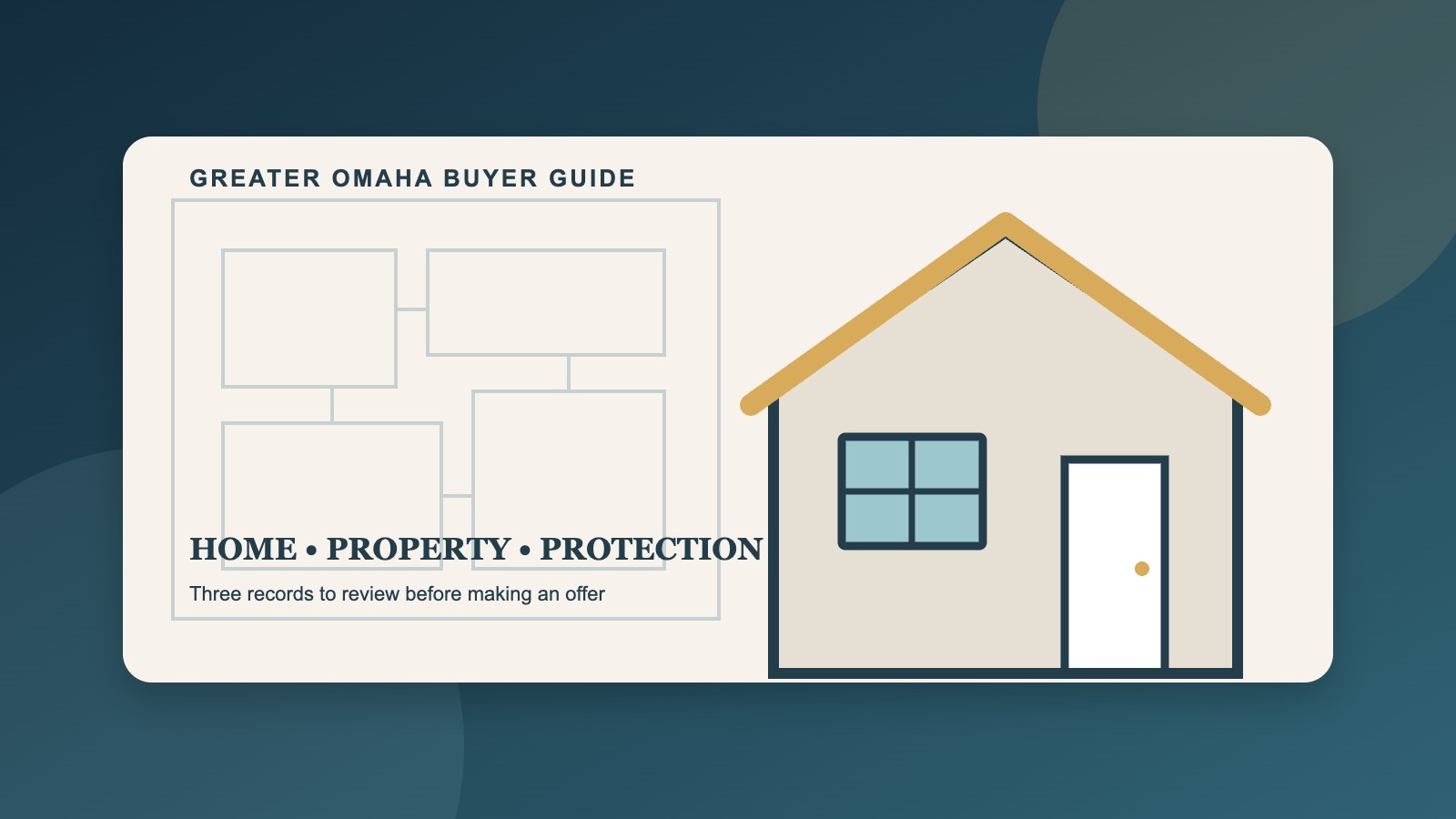
A polished model home can help you picture a finished space. It cannot tell you what your specific purchase includes. For a decision grounded in records rather than assumptions, organize your review into three files: the home record, the public and ownership record, and the protection record.
These are general questions for buyers to raise with their agent, builder, inspector, lender, title professional, insurer, and attorney as appropriate. They are not legal, tax, inspection, or financial advice, and the controlling contract and property records vary by home.
The model home is not the offer
The model may display a different elevation, lot, finish package, appliance set, landscaping plan, or collection of upgrades. Your offer or builder agreement should identify the actual property and the written terms that control it.
- Home record: lot and legal description, plan and elevation, specifications, selections, allowances, options, exclusions, substitutions, and change orders.
- Public and ownership record: jurisdiction, permits and available final approvals, parcel information, SID or HOA documents where applicable, utilities, easements, grading or drainage information, and current flood information.
- Protection record: agency relationship, inspection access, walkthrough and punch-list procedures, written warranty, financing and appraisal terms, completion conditions, and title or lien work handled by the appropriate professionals.
This three-record approach is a practical extension of Virtue Group’s broader Greater Omaha buyer guidance: identify the exact property, assign questions to qualified people, and get material terms in writing.
1. Who represents whom?
Start by asking whether the person in the sales office represents the builder, the buyer, or another party. Ask who will advise you during the offer, inspection, appraisal, selections, walkthrough, and closing stages.
The Nebraska Real Estate Commission’s consumer guidance says agency information should be provided at the earliest opportunity during or following the first substantial contact. Ask your real estate licensee to explain the agency relationship. Send questions about interpreting or changing a contract to an attorney.
2. What exactly is included in the price?
Ask for a written specification package tied to the correct lot, plan, and elevation. Compare it line by line with what you saw. Useful questions include:
- Which flooring, cabinets, counters, fixtures, appliances, and finishes are included?
- Are landscaping, irrigation, window coverings, fencing, decks, or exterior features included or excluded?
- Which selections remain open, when are they due, and what happens if an allowance is exceeded?
- Which features in the model are upgrades or are not available for this home?
- Are utility connections, lot premiums, permit-related charges, or other fees included?
- What document records the final specifications and every approved change?
Verbal descriptions are difficult to evaluate later. Ask that agreed material terms appear in the controlling transaction documents.
3. What can change after signing?
Builder agreements differ. Before becoming obligated, ask the appropriate professionals to explain the provisions governing substitutions, change orders, price adjustments, deposits, delays, cancellation, default, and unfinished work.
- Can a specified product or material be substituted? If so, when is buyer notice or approval required?
- How must the buyer request a change, and how are cost and schedule effects documented?
- Is a completion date fixed, estimated, or defined another way?
- What happens to deposits under each cancellation or default scenario?
- How does the agreement address work that is incomplete at the planned closing?
These are questions to investigate, not suggested contract language. A Nebraska attorney can advise on the meaning and effect of the actual document.
4. Which disclosure, inspection, and completion records will you receive?
Nebraska’s seller-condition-disclosure statute, Neb. Rev. Stat. § 76-2,120, includes an exception for newly constructed residential real property that has never been occupied. Ask whether that exception applies to the specific home and what builder, construction, inspection, warranty, and final-approval records will be delivered instead.
Next, identify the government office responsible for the property. An Omaha mailing address alone does not establish the permitting jurisdiction. For a property confirmed to be within the applicable system, the City of Omaha provides an online permit and application portal. Do not assume that one portal contains every inspection or final record; ask the responsible jurisdiction what is available.
Also ask:
- May the buyer hire an independent inspector, and at which construction stages is access allowed?
- Can corrected items be reinspected?
- When will the final walkthrough occur, and how will punch-list items be documented?
- Which jurisdictional approval or completion document is required before closing?
- How are unresolved items handled under the written agreement?
A code inspection, private inspection, appraisal, and warranty serve different purposes. None should be described as a guarantee that a home is defect-free.
5. What written warranty applies?
Request the actual warranty early enough to review it. The Federal Trade Commission’s new-home warranty guidance recommends reviewing what is covered, excluded, and required to make a claim. It also distinguishes a builder warranty from an optional service contract sometimes called a home warranty.
- Which structural, workmanship, system, or appliance items are covered, and for how long?
- What maintenance duties or exclusions can affect coverage?
- How and when must a claim be submitted?
- Who evaluates and repairs a covered item?
- Is coverage transferable?
- Does the document require mediation, arbitration, or another dispute process?
Do not assume Nebraska requires every builder to provide the same warranty or a fixed coverage period. The written warranty for the specific home controls the question.
6. What attaches to the lot beyond the house?
In the Omaha area, the house is only part of the due-diligence picture. Ask whether the lot is in a sanitary and improvement district, commonly called an SID. Nebraska law describes SIDs as entities that may support infrastructure or services such as sewer, water, streets, sidewalks, lighting, parks, and flood-protection works. District property may be subject to taxes and special assessments.
Neb. Rev. Stat. § 31-727.03 addresses an SID annual statement and its delivery to prospective purchasers. If the lot is in an SID, request the current statement before becoming obligated and direct questions about its meaning to the appropriate real estate, legal, tax, or district professional. Do not turn district-wide figures into an estimated individual tax bill.
Review these property-specific items too:
- HOA declaration, rules, dues, reserves, architectural restrictions, and known or planned assessments, if an HOA exists.
- Easements, drainage and grading plans, retaining walls, and responsibility for unfinished neighboring infrastructure.
- Utility providers, connection fees, and responsibility for streets, snow, trash, or common areas.
- The current parcel record through the Nebraska Department of Revenue’s county parcel-search directory. A vacant-lot or partially improved assessment is not a prediction of the completed home’s future tax bill.
- Current flood information for the exact lot through the FEMA Flood Map Service Center, followed by a property-specific insurance quote. A map can change and is not itself an insurance determination.
7. How should incentives and financing be compared?
A builder or preferred-lender credit can be one part of an offer, but it should be compared in context. Ask which lender or title-company conditions attach to the incentive and whether it changes when selections, completion timing, appraisal, or rate-lock timing changes.
The Consumer Financial Protection Bureau explains that a Loan Estimate is a standardized three-page form showing estimated loan terms, payment, closing costs, taxes, insurance, and other features. Its loan-comparison guidance recommends comparing Loan Estimates rather than focusing on one advertised number.
- Compare the rate, points or credits, origination charges, other closing costs, cash to close, and projected payment.
- Ask a licensed lender how a construction delay or rate-lock expiration would be handled.
- Ask how upgrades or a low appraisal could affect financing and cash needed.
- Do not assume an incentive makes one complete offer less expensive than another.
8. What must be true before closing?
Ask the team to identify the written completion standard and the evidence expected before closing. Depending on the property and agreement, questions may include:
- Which responsible-jurisdiction approvals must be available?
- Must utilities be operational?
- When are the final walkthrough and punch list completed?
- When is the written warranty delivered?
- How will unfinished work be documented and handled?
- What title and lien searches, releases, or other protections will the title, closing, and legal professionals use?
Holdbacks, escrow arrangements, lien issues, and contract remedies require property- and document-specific advice. Do not rely on a generic article to prescribe them.
One-page offer-readiness checklist
Home record
- Correct lot, legal description, plan, and elevation identified.
- Included specifications, options, allowances, exclusions, and fees documented.
- Substitution and change-order process reviewed.
- Deposit, delay, default, cancellation, completion, and unfinished-work questions assigned to the appropriate professionals.
Public and ownership record
- Responsible jurisdiction and available permit or final records identified.
- Current parcel record reviewed without treating it as a future-tax estimate.
- SID annual statement and HOA documents requested where applicable.
- Utilities, easements, grading, drainage, infrastructure, and current flood information reviewed for the lot.
Protection record
- Agency relationship understood.
- Independent inspection access, walkthrough, reinspection, and punch-list process documented.
- Actual warranty and claim process reviewed.
- Complete financing offers compared using Loan Estimates.
- Closing, title, lien, and insurance questions assigned to qualified professionals.
Bring the records to a focused strategy session
Virtue Group can help you organize the questions around the exact lot and written builder materials. You can also review our address-level Greater Omaha location framework before narrowing your search.
Cali Rethwisch’s public profile describes her custom-build experience, including work with lot selection, floor plans, finishes, and final walkthroughs. This article is builder-neutral and does not describe any builder’s specific price, contract, quality, timing, inspection policy, or warranty.